Reggio Emilia, the hundred languages of the child, and what it means for bilingual families

In 1945, in a small Italian town called Reggio Emilia, a young teacher named Loris Malaguzzi started something that would become one of the most influential approaches to early childhood in the world. The town had just emerged from the war. Parents were rebuilding. Schools were being made by hand, often literally — Malaguzzi famously joined a community of parents salvaging bricks from bombed buildings to build a new nursery school. He stayed for the rest of his life.
What emerged from those decades of work is now known as the Reggio Emilia Approach. It is taught in early-childhood programs around the world. There are Reggio-inspired schools in Stockholm, in Seoul, in San Francisco, in Sydney. And yet, in the bilingual-parenting space — the space this site exists in — Reggio is almost never named.
This piece is about why I think it should be.
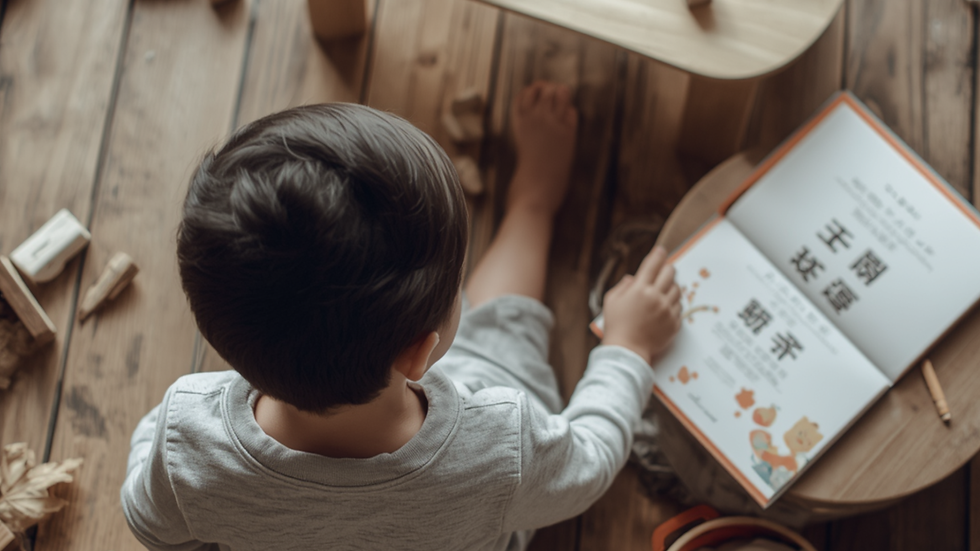
The hundred languages
The foundational idea of Reggio is what Malaguzzi called the hundred languages of the child. He wrote a poem about it — the kind that gets reprinted everywhere because it captures something quietly radical:
The child has a hundred languages, a hundred hands, a hundred thoughts, a hundred ways of thinking, of playing, of speaking. A hundred always a hundred ways of listening of marveling of loving a hundred joys for singing and understanding…
The argument is that children have many ways of expressing themselves, and speech is only one of them. There is the language of gesture. The language of music. The language of repetition. The language of sand and water and dough. The language of touch. The language of being held. The language of pointing.
What schools and parents do, often without meaning to, is reduce these hundred to one — typically the language of "literacy" as defined by school systems. Use your words. Tell me with your mouth. Children's other languages get gently demoted.
The Reggio approach refuses this. It treats every mode of expression as a real language, worth time and attention.
Where bilingualism fits
For families raising children in more than one language, Malaguzzi's idea has a literal layer.
When we say "the hundred languages of the child," in a bilingual household we can mean the figurative hundred — gesture, music, drawing, play — but we can also mean the literal: Italian, English, German, Spanish, Mandarin, Arabic, Polish, Bengali, the language of the grandmother, the language of the school, the language of the playground. Each is a real channel. Each is doing real work in a child's developing mind.
Most bilingual-parenting advice freely available online is rooted in a language-acquisition-as-skill model. How to maximise vocabulary input. The thirty-million-word gap. The OPOL strategy. The five-hour-a-week rule. All useful. All slightly mechanical.
The Reggio frame is different. It treats the child not as a vessel to be filled with vocabulary but as a protagonist in their own learning. The question isn't "how do I get more Italian into her" — it's "what does Italian do for her, and how do I make it interesting enough to live in her body the way her first language already does?"
That changes the practical answer in ways that matter.
What it changes in practice
Three concrete things, if you sit Reggio thinking next to bilingual parenting.
The environment as the third teacher
Reggio classrooms are famously beautiful. Not in an Instagram-aesthetic way — in a taken seriously way. Natural materials. Generous space. Children's work displayed at their eye level. The argument is that the environment isn't a backdrop; it's a teacher — the third one, after the child themselves and the adults around them.
For a bilingual family, the environment is the home, and the home tells the child what each language is for. Italian only at lessons in the kitchen? It's a school language. Italian everywhere — on bedtime books, on the labels of jars, on songs in the car, on the framed photograph of the grandmother who speaks it — and it's a home language. The same words land differently depending on the room they live in.
The most quietly powerful thing a bilingual parent can do is treat the minority language as a room of the house, not a subject on a curriculum.
The hundred languages applied to the hundred contexts
Reggio practitioners don't sit children down and teach them. They invite. A clay table is set out; the child finds it. A box of leaves is on the floor; the child arranges them. A friend visits; conversation happens.
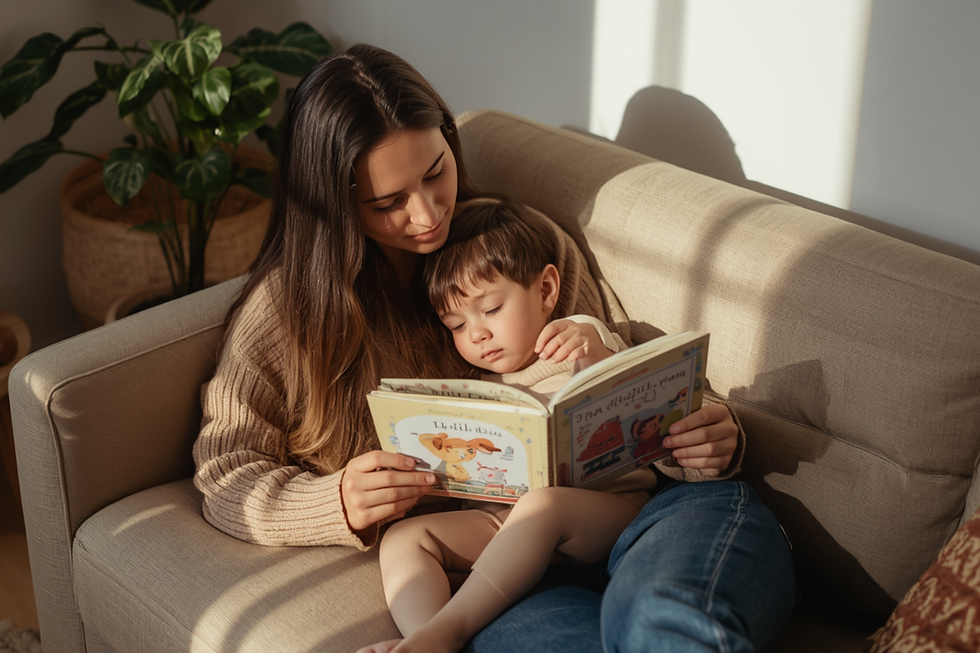
For multilingual parenting, this means: don't sit the child down with Italian flashcards. Set the table out. A Topipittori picture book on the cushion. An Italian song on the morning playlist. An Italian-speaking grandparent on FaceTime once a week. A bilingual book with a vocabulary strip the child can point to. The language lives in things, not in lessons.
This is exactly the opposite of how most well-meaning bilingual-parenting interventions are designed. They assume the child needs to be taught. The Reggio frame assumes the child is already learning — our job is to put interesting things within reach.
The child as protagonist of their own language
The deepest Reggio idea, and the one that changes the most: the child is the protagonist of their own learning. They are not consumers. They are not absorbers. They are agents with theories, with preferences, with strategies of their own.
For bilingual children, this means recognising that they are making decisions about which language to use in which moment. A two-year-old in our family says acqua to me and water to her father in the same minute, never mixing them up. She has chosen. She has a strategy. She is not confused; she is doing remarkably sophisticated linguistic work.
The Reggio frame asks us to take that seriously — to treat the child's bilingualism as her own creative project, not something we are administering to her. We are providing the materials. She is the artist.
Once you start seeing it this way it becomes hard to unsee. Children's code-switching, their preference for one language in one room and another in another, their tendency to refuse to translate on demand even when they perfectly well could — all of these stop being problems to be managed and start being evidence of a child doing her own linguistic work.
What am I trying to do with this site
This site, and the small picture books I make under it, are an attempt to apply Reggio thinking to early bilingual childhood. The downloadable books, the Pinterest curation, the writing — they are all small invitations toward the materials of language, rather than instructions about how to acquire it.
The bilingual picture books on this site are designed in a Reggio register: a scene a child can enter (the main illustration), with small things to point at and name (the vocabulary strip at the bottom of each spread). The child decides what to look at. The parent reads what she points to. No flashcards, no drilling. The book is the environment; the child is the protagonist.
The hundred languages include the languages of two tongues. They include the language of a book that two parents read aloud in different voices on different days. They include the language of the small image of a flower in a circle on a page. They include the language of pointing.
The child is the protagonist. We are the environment.
— Paola


Comments