How to raise a bilingual child without burnout

A practical guide for real families
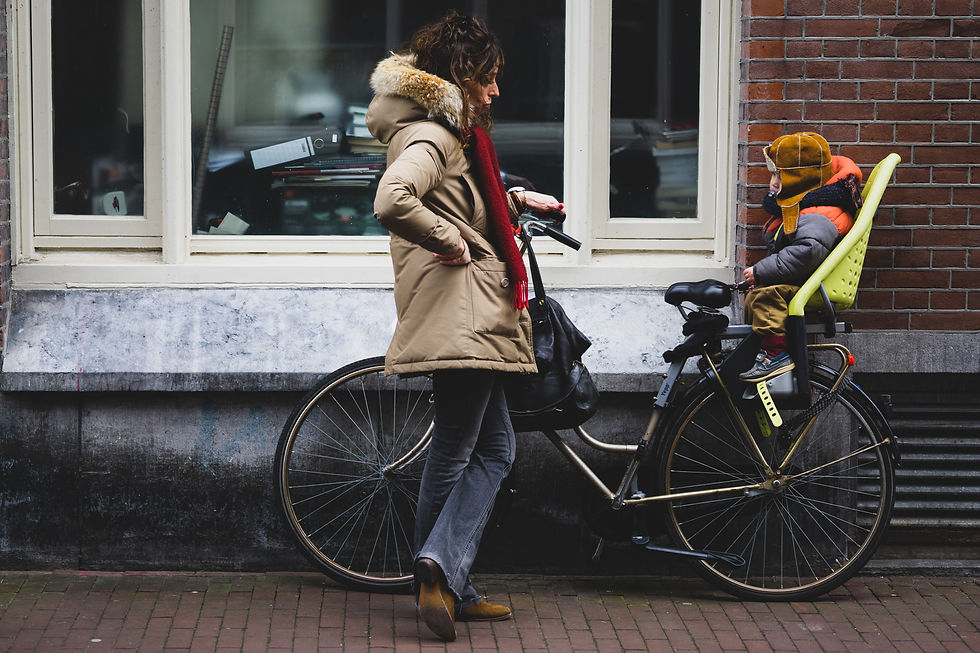
There's a particular flavour of guilt that comes with raising a bilingual child. You read an article that says*minority language exposure must be at least 30% of waking hours and you do mental arithmetic against a working week, a tired evening, a toddler who wants to watch the same English picture book for the fourth time. The bar feels uncrossable. So you put it off until next week, when there will be more energy, more time, more of the right kind of attention.
There won't be.
The good news, which I wish someone had told me earlier, is that raising a bilingual child does not require perfection or even consistency in the way you might be imagining. Decades of research on bilingual acquisition keep landing in roughly the same place: what matters is not the quantity of perfect immersion you provide, but the consistency of the relationship between a person and a language. Children learn languages from people they love, in moments that mean something. That's it. That's the whole science.
Here's what actually works, in practice, for the kind of family that has school runs and work calls and a 6pm meltdown:
One person, one language — but make it elastic
The classic OPOL (one parent, one language) approach assumes a stable two-parent household where each parent is fluent in a different language. Real families are messier. If you and your partner both speak English at home but you want to pass on Italian, you can't be the "Italian parent" all the time. What you can be is the Italian parent in specific contexts — bath time, cooking, walking to the park.
The brain is exquisitely good at sorting language by context once a context-language pairing is established. Choose two or three daily anchor moments and keep the language consistent in those moments. Pranzo is in Italian. Bagno, or Bagnetto (the word I personally use) is in Italian. Bicicletta is in Italian. Everything else can be English without diluting the bilingualism. We've been doing this with our daughter and her Italian comprehension is well ahead of her active production — exactly what you'd expect, and exactly fine.
Read the same picture books over and over in two languages
A child will happily hear The Very Hungry Caterpillar twenty times. By the fifth read in Italian, they're predicting "venerdì... cinque fragole." Repetition is not boring to a small child the way it's boring to me and you. Repetition is how language gets installed.
Wordless picture books are the cheat code here — same images, infinite languages, no translation work. We have a list of ten in an upcoming post; books like L'Albero by Iela Mari, Journey by Aaron Becker, Wave by Suzy Lee — they live equally well in any voice you give them.
Sing more than you think necessary
Songs and nursery rhymes encode rhythm, stress patterns, vowel quality and grammatical morphemes in a way that ordinary speech doesn't. Stella stellina teaches Italian rhythm before any conscious learning of Italian rhythm is possible. Schlaf, Kindlein, schlaf puts German vowel patterns into a small child's ear at an age when those patterns are still plastic. You don't need to be a good singer (I know something about that!). You need to be a singing parent.
Build five or six songs into the daily rhythm. Bath song, getting-dressed song, going-to-sleep song. Ten minutes a day, for years. That's all.
What if you're not fluent in the second language?
You can still raise a bilingual child. Three things matter:
- One consistent input source — a grandparent, a nanny, a weekly playgroup, a high-quality YouTube channel (with all the releavant warnings that come with using digital channels) like Carl's Car Wash in Italian. Doesn't have to be you.
- You as the encourager, not the source — your job is to be visibly enthusiastic about the second language without trying to teach it yourself. Children take their cues from us about what is interesting and what is not. If you treat a language as serious and beautiful, your child will too.
- Books, songs, and trips — the language has to be embodied somewhere outside of "lessons." A trip to Italy at age four, if that's an option, does more than two years of vocabulary cards.
A starter reading list
If you want to go further:
- Bilingual: Life and Reality — François Grosjean. The accessible classic. Demystifies the science.
- Maximize Your Child's Bilingual Ability — Adam Beck. Practical, real-world.
- Be Bilingual — Annika Bourgogne. Especially good on heritage-language families.
All three are linked here and in our Resources page via Bookshop.org or Amazon if I cannot find them at independent bookstores.
The thing that gets in the way of bilingualism in most families isn't lack of time or aptitude. It's the belief that you have to do it perfectly or not at all. You don't. You have to do it consistently and with affection. The rest sorts itself out.
As my Nonna always said il meglio è nemico del bene.
Comments